Toggle search bar

WxT Language switcher

Date
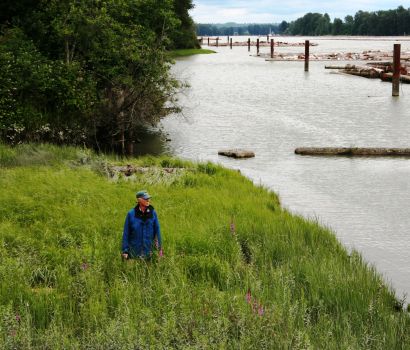
Rivers and their associated floodplains and wetlands are both natural and cultural landscapes. The ecological health of river corridors is important to human cultures and land-uses and have been for millennia. Used by Indigenous peoples as trading routes, sources of food, and transportation pathways, river valleys have strong cultural meaning. They were significant to the settlers and hold strong connections for many cultures across the planet. They continue to be vital to the livelihoods of millions of people today.
Date
Environment and Climate Change Canada’s National Hydrological Service is responsible for measuring and monitoring the volumetric flow rate, or ‘discharge’, and water level, or ‘stage’, of rivers and lakes across the country. Together with funding partners including provinces, territories, and local conservation authorities, we operate thousands of hydrometric stations throughout Canada. These hydrometric stations provide critical data used by scientists, engineers, policy makers, and communities alike.
Date
From October 6–10, 2025, the Canadian Parks Council (CPC) and Canadian Heritage Rivers System (CHRS) came together for Congress 2025 at the Wilderness Edge Retreat & Conference Centre in Pinawa, Manitoba. This year’s Congress was co-hosted by Nunavut Parks and Manitoba Parks, showcasing a powerful example of interjurisdictional collaboration and cultural exchange. We extend our heartfelt thanks to the Nunavut Parks team, who traveled great distances to lead, host, and enrich the Congress with their knowledge, warmth, and cultural traditions. Their contributions were central to the success of this year’s gathering.
Date
Waterways have long been central to Canadian history, recreation and livelihoods. Canada’s extensive network of waterways including tens of thousands of ponds, rivers, lakes, and canals continue to shape the wellbeing of Canadian residents, as they have done for centuries. At the Canadian Heritage Rivers System’s Annual General Meeting, CHRS participants and CPC Board members, designates and Leadership Residency participants participated in an exercise to share their favourite waterway by marking it on a large map of Canada and explaining why it was special to them. The result was a great diversity of rivers and lakes identified across the country. While many of the waterbodies identified are not part of the Canadian Heritage Rivers System, the exercise highlighted how important water is to the lives of people living in Canada.
Date
The idea of a national day dedicated to rivers was inspired by the success of BC Rivers Day, which had been celebrated for over two decades in British Columbia. Among the groups advocating for this annual celebration was the Canadian Heritage Rivers Board. The concept received unanimous endorsement at the 2001 Canadian Rivers Heritage Conference, setting the stage for the official proclamation the following year. The CHRS's mission aligns perfectly with the goals of Canadian Rivers Day. By designating rivers or river segments as heritage rivers, the CHRS helps to raise awareness about the significance of these waterways and celebrates the efforts of the people who care for them.
Date
Paddling provides an incredible opportunity to get up close and personal with the rich history and natural beauty of the Rideau Waterway Canadian Heritage River. Extending from Ottawa to Kingston in Eastern Ontario, the waterway is largely comprised of the Rideau Canal National Historic Site and UNESCO World Heritage Site, constructed between 1826 -1831. Designated a Canadian Heritage River in 2000 for its historical and recreational values, the waterway offers the perfect setting for relaxation and recreation, particularly for visitors travelling by canoe or kayak.
Date
Canadian Heritage Rivers are teeming with life. From the vibrant schools of brook trout in the Missinaibi River to the Atlantic salmon navigating the Restigouche, these ecosystems are vital for many species. Despite their crucial role, these rivers are increasingly threatened by various environmental challenges and human activities. Among these issues, protecting species at risk stands out as a priority.
Date
As the boats are pulled from its waters, a thick layer of ice forms on the Red River, allowing for the creation of the Nestaweya River Trail. This trail is skillfully flooded and plowed with warming huts deployed, transforming the Red River into a winter pathway. Winding along the Red River and joining with the Assiniboine River, this trail brings together outdoor enthusiasts to enjoy a walk, skate, run, hockey game or a curling match.